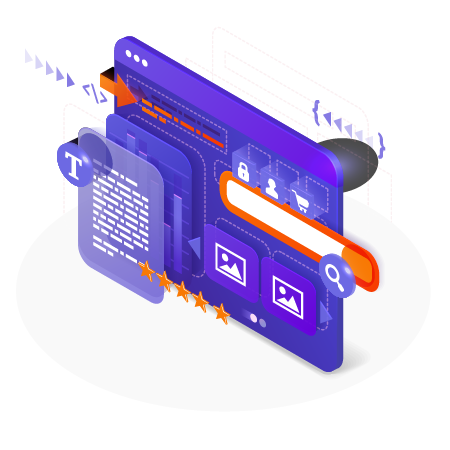
A structured library of standardised design elements — buttons, cards, form fields, navigation patterns, typography styles, colour tokens, spacing rules — that are defined once and applied consistently across every page of the website. Reusable components are the modular building blocks that compose pages, ensuring visual consistency and development efficiency.
Brand guidelines define the rules of the brand identity (logo, colours, typography, tone of voice) across all media. A design system translates those brand rules specifically into the digital and web context — defining how every interactive element, layout pattern and component is built and behaves in the browser.
Because a component built once (a pricing card, a testimonial block, a feature section) can be dropped into any page without rebuilding or restyling. Adding new pages, refreshing content or creating campaign sections becomes significantly faster and cheaper when drawing from an established component library.
A design token is a named variable that stores a specific design decision — for example, ‘$color-primary: #1A73E8’ or ‘$spacing-md: 16px’. Tokens are referenced throughout the design system rather than hardcoding values. When the primary colour needs updating, changing the token updates every element that references it simultaneously.
Design tools: Figma (most widely used, supports component libraries and design tokens), Sketch, Adobe XD. Development implementation: CSS custom properties (native variables), Tailwind CSS (utility-first), Storybook (component documentation and testing environment). For WordPress: a block-based theme with a curated block library.
By limiting the available design choices to those defined in the system. Content editors select from approved component layouts rather than building pages from scratch. This reduces the risk of off-brand pages, speeds up content creation and ensures every new page is consistent with the established visual language without requiring designer review.
A methodology for building design systems hierarchically: atoms (basic HTML elements — buttons, inputs, labels), molecules (small groups of atoms forming a functional unit — a search box), organisms (complex UI sections — a navigation bar, a hero section), templates (page structures) and pages (specific template instances with real content).
When a website reaches a level of complexity where inconsistency becomes a recurring problem, when multiple people (designers, developers, content editors) are working on the site simultaneously, or when the organisation anticipates ongoing web development that would benefit from a shared design foundation rather than bespoke work on each project.
A well-maintained design system makes redesigns more efficient — updating core tokens and components propagates changes throughout the site systematically rather than requiring page-by-page rework. Organisations with no design system often find redesign projects significantly longer and more expensive than anticipated.
Yes, but it is more complex than building one from the start. Retroactive systemisation involves auditing existing design patterns, identifying inconsistencies, agreeing on standardised components, and gradually migrating the existing site to use them. An incremental approach (systemising the most-used components first) is more practical than a full-site refactor.