
Menu
Organic social media builds an audience over time — but when you have a specific goal to achieve in a defined timeframe, a paid social campaign can deliver the reach and results that organic activity alone can't.
Social campaign setup creates a targeted, structured campaign designed around a specific objective. Whether the goal is leads, event sign-ups, product sales or brand awareness, every element — audience, creative, copy, budget and bidding strategy — is built to deliver that outcome as efficiently as possible.

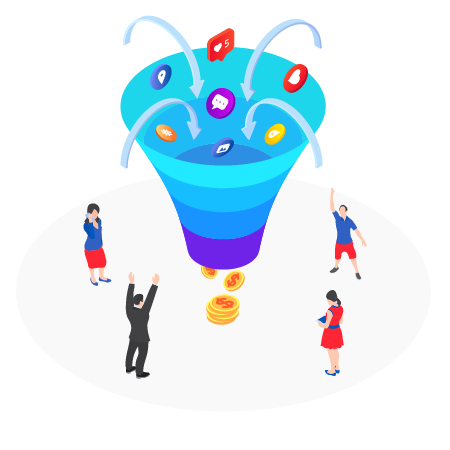
A social campaign is a paid advertising campaign run on social media platforms to achieve a specific marketing objective within a defined time period. Social campaign setup involves defining the campaign goal, building the target audiences, creating the ad creative and copy, configuring the campaign structure within the platform’s ad manager, setting the budget and bidding strategy, and launching the campaign with the tracking in place to measure its performance.
You need this when you want to put a deliberate plan behind what you publish on social, when reactive, last-minute content creation is the norm and quality is suffering as a result, or when you’re running campaigns with specific timelines and need content to be ready in advance. A content calendar turns social media from a daily scramble into a planned, strategic programme.
This service includes the development of a social media content calendar covering a defined period, with content planned against agreed themes, campaign dates, platform requirements and audience insights. Delivered as a ready-to-use content calendar with individual post briefs, copy guidance and asset requirements for each planned post.

Most marketing companies focus on channels and tactics.
We focus on reaction.
Before selecting platforms, formats, or media spend, we define how your audience thinks, feels, and decides. We use behavioural psychology to understand what will capture attention, build trust, and motivate action — then choose the channels that best support that outcome.
Every channel we use has a clear purpose, a defined role, and a measurable objective. Nothing is done “because it’s popular” or “because it’s expected”.
The result is marketing that feels natural to engage with, works across multiple channels, and is designed to deliver meaningful, long-term results.
Want to see how this approach works in practice?
The configuration of a defined programme of social media activity — whether organic or paid — with a specific objective, target audience, defined timeframe, content plan, measurement framework and clear success criteria.
Ongoing management is the consistent baseline of regular posting, engagement and community management. A campaign is a time-limited, focused initiative with a specific objective (product launch, event promotion, lead generation drive) that runs alongside or temporarily intensifies the baseline activity.
The campaign objective (awareness, traffic, leads, sales), the target audience (demographics, interests, platform usage), the message or offer, the content assets required, the budget (for paid components), the campaign timeframe and the KPIs against which performance will be measured.
An organic campaign relies on unpaid content distribution — posts, stories, carousels and videos — with reach determined by the algorithm and existing follower engagement. A paid campaign amplifies content through advertising spend to reach defined audiences beyond existing followers.
By making objectives Specific (this campaign will generate 50 enquiries), Measurable (via form submissions tracked in the CRM), Achievable (based on historical conversion data), Relevant (aligned to the business’s commercial priority) and Time-bound (within the six-week campaign period).
A campaign-specific hero piece (a video, a whitepaper, an offer announcement), supporting content that reinforces and contextualises the campaign message across multiple posts, and a clear call-to-action asset (a landing page, a form, a specific piece of content to download or share).
By creating UTM-tagged URLs for all campaign links (enabling attribution in Google Analytics), setting up conversion tracking for the desired action (form completion, purchase, sign-up), and establishing a baseline of the metrics the campaign is designed to improve.
A document defining the campaign objective, target audience, message, content plan, budget (if paid), KPIs and measurement approach. It should be approved by marketing leadership before content production or budget commitment begins.
By comparing KPI performance against the targets set in the brief, calculating cost-per-result for paid components, reviewing which content assets performed best and identifying what should be replicated or changed in future campaigns.
Launching a campaign without a defined objective and measurement plan. Campaigns that are set up based on available content rather than a specific commercial objective typically underperform and are impossible to evaluate objectively after the fact.
This website uses cookies to improve your experience. Choose what you're happy with.
Required for the site to function and can't be switched off.
Help us improve the website. Turn on if you agree.
Used for ads and personalisation. Turn on if you agree.