
Menu
Social media can be one of the most effective channels for generating leads — but only when the content is built with lead generation in mind. Engagement posts and brand-building content are valuable, but they're different to posts specifically structured to attract, qualify and convert potential customers.
Lead generation post structure develops a content approach that serves that commercial purpose. From the format and the hook to the offer and the call to action, every element is designed to move the right people from passive follower to active prospect — without your social presence feeling like a hard sell.


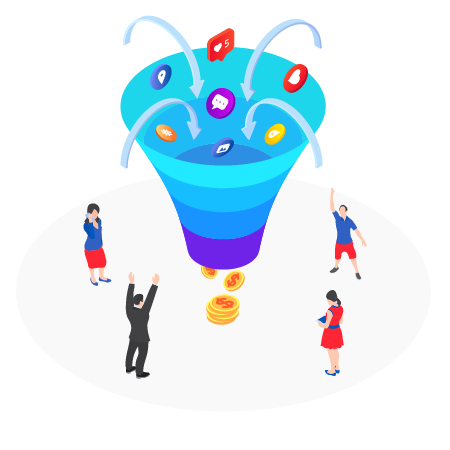
Lead generation post structure is a content framework for creating social media posts specifically designed to attract and capture potential customers. It defines how to build posts that combine audience targeting, a relevant offer or hook, and a clear conversion pathway — whether through a form, a link or a direct message — turning social media content into a source of qualified leads rather than just brand engagement.
You need this when you want to build a social following that’s growing consistently rather than stagnating, when your content isn’t generating new followers despite being regularly published, or when you’ve recently rebranded or repositioned and need to grow a new, relevant audience around the updated identity. Audience growth strategy identifies the approaches most likely to bring in the right followers rather than just more of them.
This service includes an audience growth strategy covering organic and paid tactics, competitor analysis, hashtag and engagement strategy, and a programme of activity designed to attract the right followers to your accounts. Delivered as an audience growth programme with monthly reporting on follower growth, demographic quality and engagement rate.

Most marketing companies focus on channels and tactics.
We focus on reaction.
Before selecting platforms, formats, or media spend, we define how your audience thinks, feels, and decides. We use behavioural psychology to understand what will capture attention, build trust, and motivate action — then choose the channels that best support that outcome.
Every channel we use has a clear purpose, a defined role, and a measurable objective. Nothing is done “because it’s popular” or “because it’s expected”.
The result is marketing that feels natural to engage with, works across multiple channels, and is designed to deliver meaningful, long-term results.
Want to see how this approach works in practice?
The strategic design of organic social media posts specifically intended to generate leads — structuring content to identify a problem, establish credibility, present a relevant resource or offer and include a clear, low-friction mechanism for interested people to connect or enquire.
Yes, though at smaller scale than paid. High-value content that addresses a specific, felt problem — combined with a direct invitation to get in touch, download a resource or receive a consultation — can generate genuine enquiries from engaged followers.
Relevance (it speaks directly to a problem your ideal customer has), credibility (it demonstrates authority or specific knowledge), value (it offers something genuinely useful in exchange for action) and a clear, specific call to action with a low barrier to response.
Original insights or frameworks that demonstrate expertise (generating DMs from interested prospects), diagnostic content that helps readers identify their own problem, case study posts that show a specific result, and invitation posts offering a free consultation, audit or resource download.
A technique where a post invites followers to comment a specific word (e.g., ‘GUIDE’) to receive a resource via direct message. This leverages the comment engagement to boost algorithmic reach while creating a direct conversation in the DM as a lead entry point.
Open with a specific problem statement that resonates with the target audience, demonstrate specific knowledge or evidence of the solution, offer a tangible resource (a checklist, a template, a brief consultation), and close with a direct instruction (‘DM me [word] to receive it’ or ‘Comment below and I’ll send the link’).
By responding promptly to DMs and comments, directing enquirers to a form, call booking page or email conversation, recording new contacts in the CRM within 24 hours and having a defined follow-up sequence for social-sourced leads.
A soft CTA invites low-commitment action: ‘comment your thoughts’, ‘save this for later’, ‘share with someone who needs this’. A hard CTA asks for a commercial step: ‘book a call’, ‘download our guide’, ‘enquire now’. A mix of both across the content calendar is more effective than exclusively hard CTAs.
One in five to one in four posts is a sustainable ratio. More frequent direct sales posts reduce organic reach and audience trust over time. Credibility and value posts should dominate the calendar, with lead generation posts appearing regularly but not at every opportunity.
Through UTM-tagged links to landing pages (tracking clicks to conversion), form completion attribution to social sources in the CRM, direct message volume as a lead proxy, and periodic attribution surveys that ask new customers how they first found the business.
This website uses cookies to improve your experience. Choose what you're happy with.
Required for the site to function and can't be switched off.
Help us improve the website. Turn on if you agree.
Used for ads and personalisation. Turn on if you agree.