
Menu
Monthly SEO reporting turns the complexity of search performance into a clear, consistent picture of progress. It gives your team and stakeholders a shared understanding of where rankings stand, how organic traffic is moving, and which activities are having the most impact.
A well-constructed monthly report doesn't just look backwards — it informs what happens next. Regular performance reviews create accountability, highlight the opportunities that deserve more attention, and ensure your SEO investment is continuously directed where it's most likely to deliver.



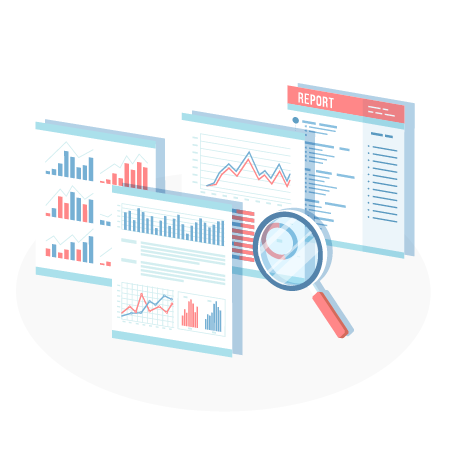
Monthly SEO reporting is the regular production of a structured report covering a website’s organic search performance over the preceding month. It typically includes ranking movements, organic traffic trends, technical health updates and visibility metrics, accompanied by analysis that explains what the data means in the context of the current strategy and what actions are recommended for the period ahead.
You need this when structured data could significantly improve how your pages appear in search results and you haven’t yet implemented it, when your rich snippet potential is being left untapped, or when a competitor is benefiting from enhanced search results and you aren’t. Schema markup helps search engines understand what your content is about and often unlocks the featured placements that attract more clicks.
This service includes the identification of schema markup opportunities across your site, implementation of appropriate structured data types — which may include Article, Product, FAQ, LocalBusiness, Event and others — and testing and validation. Delivered as a schema markup implementation with Google Rich Results Test validation and ongoing monitoring.

Most marketing companies focus on channels and tactics.
We focus on reaction.
Before selecting platforms, formats, or media spend, we define how your audience thinks, feels, and decides. We use behavioural psychology to understand what will capture attention, build trust, and motivate action — then choose the channels that best support that outcome.
Every channel we use has a clear purpose, a defined role, and a measurable objective. Nothing is done “because it’s popular” or “because it’s expected”.
The result is marketing that feels natural to engage with, works across multiple channels, and is designed to deliver meaningful, long-term results.
Want to see how this approach works in practice?
A structured, regular report documenting the performance of the SEO programme — summarising keyword ranking changes, organic traffic trends, technical health status, content performance and progress against the SEO roadmap — enabling management and stakeholders to track progress and investment value.
An executive summary, organic traffic metrics (sessions, users, conversions from organic), keyword ranking changes (new rankings, improvements, declines), technical SEO status updates, content performance highlights, backlink profile summary and a summary of work completed and planned next month.
Marketing leadership who oversee the SEO investment, business leadership who need to understand organic channel contribution to revenue, and the technical and content teams responsible for implementing SEO actions, who need to see the impact of their work.
By leading with business impact (organic traffic, leads and conversions generated) before technical metrics. Contextualise data with comparison to prior periods, explain what has changed and why, and focus recommendations on actions rather than metrics.
Google Analytics or equivalent (traffic and conversion data), Google Search Console (impressions, clicks, average position, indexing status), rank tracking software (keyword position changes) and technical audit tools (health check summary).
Two to four hours for a well-structured, template-based report covering a typical SEO programme. The efficiency comes from having a defined template and consistent data sources rather than recreating the reporting structure each month.
Organic sessions and conversions (commercial impact), keyword ranking improvements for target terms (programme effectiveness), new referring domains added (link-building progress) and Core Web Vitals status (technical health). These four areas cover the commercial, strategic, link and technical dimensions of SEO performance.
Partially. Dashboards in Looker Studio (Google Data Studio) connecting to Google Analytics, Search Console and rank tracking APIs can automate data visualisation. The analysis, interpretation and strategic recommendations still require human input.
By attributing organic channel conversions to their economic value — revenue generated or leads valued at average commercial worth — and comparing this to the cost of the SEO programme. A monthly trend in organic revenue contribution is the clearest measure of SEO ROI.
Reporting metrics without context or interpretation. A ranking drop from position 3 to position 4 looks alarming without the context that average positions fluctuate naturally. Effective SEO reporting explains what the data means, not just what it shows.
This website uses cookies to improve your experience. Choose what you're happy with.
Required for the site to function and can't be switched off.
Help us improve the website. Turn on if you agree.
Used for ads and personalisation. Turn on if you agree.