
Menu
Knowing where your website ranks for the keywords that matter most to your business is fundamental to understanding how your SEO is performing. Without that visibility, you're making decisions without knowing whether they're working.
Keyword rank tracker setup puts that visibility in place. A properly configured system that monitors your positions across the search terms your customers use, tracks changes over time, and surfaces the movements that require attention — so your SEO team is always working from an accurate, current picture of where you stand.



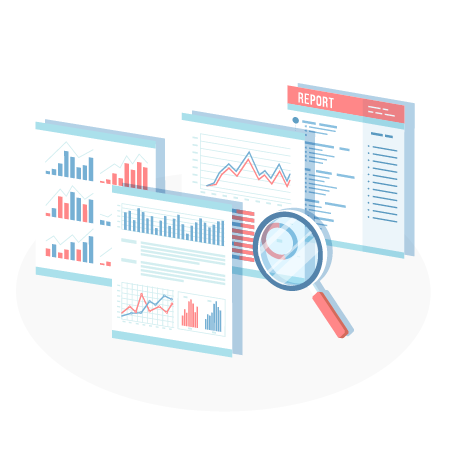
A keyword rank tracker is a tool configured to monitor the positions a website holds in search engine results pages for a defined set of keywords. Rank tracker setup involves selecting the platform, entering the target keywords, configuring location and device settings, and establishing the reporting frequency — producing an ongoing data feed that shows how rankings change over time and alerts the team to significant movements.
You need this when your website isn’t appearing in search results for the terms your customers are using, when organic traffic is low or declining, or when you’re relying heavily on paid channels because organic isn’t delivering. A full SEO service gives you the technical, content and authority foundations required to become genuinely visible in search over time.
This service includes a full SEO programme covering technical audit and fixes, keyword research, on-page optimisation, content strategy, link building and monthly performance reporting. Delivered as a fully managed SEO service with a dedicated account manager, regular reporting and continuous optimisation across all elements of organic search performance.

Most marketing companies focus on channels and tactics.
We focus on reaction.
Before selecting platforms, formats, or media spend, we define how your audience thinks, feels, and decides. We use behavioural psychology to understand what will capture attention, build trust, and motivate action — then choose the channels that best support that outcome.
Every channel we use has a clear purpose, a defined role, and a measurable objective. Nothing is done “because it’s popular” or “because it’s expected”.
The result is marketing that feels natural to engage with, works across multiple channels, and is designed to deliver meaningful, long-term results.
Want to see how this approach works in practice?
The configuration of a software tool that monitors where your website appears in search engine results pages for a defined set of target keywords — tracking position over time, measuring improvement from SEO activity and identifying keywords that need attention.
Manual position checks are unreliable because search results are personalised. A rank tracker checks from an objective location, records position history and monitors multiple keywords simultaneously — providing consistent, comparable data that manual checking cannot.
Your core service and product keywords, location-specific terms relevant to your target geography, competitor brand terms where you want to appear in comparison searches and long-tail variations that your most valuable customers are likely to use.
Daily tracking is available and appropriate for high-priority keywords in competitive markets. Weekly tracking is sufficient for most businesses and produces enough data to identify meaningful trends without the noise that daily fluctuations introduce.
A periodic summary of keyword positions, changes from the previous reporting period, keywords that have entered or left the top ten, and correlation with any technical or content changes made during the period.
SEMrush, Ahrefs, Moz, Advanced Web Ranking and SE Ranking are among the most widely used platforms for professional keyword rank tracking. Each has different strengths in terms of data freshness, accuracy and reporting capability.
Enough to cover the full scope of search intent relevant to your business. For a focused service business, 50 to 200 keywords is a reasonable range. For businesses with broad product catalogues or national SEO campaigns, tracked keyword sets in the thousands are appropriate.
Yes. By correlating position changes with specific optimisation activities (a page update, a new blog post, a technical fix), rank data provides the most direct evidence of whether SEO work is producing results.
Investigate whether the drop is algorithm-related (affecting multiple keywords simultaneously), competitor-related (a specific competitor improving) or technical (a page being accidentally removed from the index). Each cause requires a different response.
No. Click-through rates vary significantly by position and by search feature. Position one for a keyword with Google’s own featured snippet or shopping results may generate less click-through than position three for a keyword without these features.
This website uses cookies to improve your experience. Choose what you're happy with.
Required for the site to function and can't be switched off.
Help us improve the website. Turn on if you agree.
Used for ads and personalisation. Turn on if you agree.