
Menu
Every business loses prospects somewhere in its funnel — but not every business knows exactly where, or why. Understanding the specific points where potential customers disengage is the first step towards improving the conversion rate at every stage of the journey.
A conversion funnel review maps your sales process from awareness to decision and examines it with fresh eyes. Where are prospects getting stuck? Where are they falling away? And what changes to messaging, structure or follow-up would keep more of them moving towards a sale?


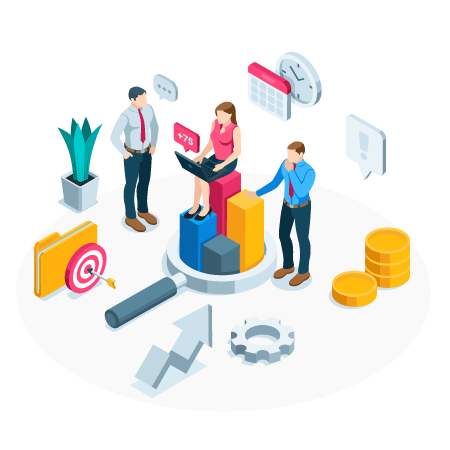
A conversion funnel review is an analysis of the stages a prospect moves through between first becoming aware of a business and making a purchase decision. It maps the current funnel, examines conversion rates at each transition point, identifies where the most significant drop-off is occurring, and produces recommendations for the changes most likely to improve the overall conversion rate.
You need this when you need to reach new prospects beyond your existing network, when your sales pipeline is too reliant on inbound enquiries and referrals, or when you’re entering a new market and need to build a pipeline of qualified opportunities from scratch. Outbound prospecting done well opens conversations with people who haven’t yet found you.
This service includes the development of a prospecting strategy, list building or data sourcing, copywriting of outreach sequences across email and/or phone, and execution of the outreach programme. Includes performance reporting on contact rates, responses and meetings booked. Delivered as a managed outbound prospecting service.

Most marketing companies focus on channels and tactics.
We focus on reaction.
Before selecting platforms, formats, or media spend, we define how your audience thinks, feels, and decides. We use behavioural psychology to understand what will capture attention, build trust, and motivate action — then choose the channels that best support that outcome.
Every channel we use has a clear purpose, a defined role, and a measurable objective. Nothing is done “because it’s popular” or “because it’s expected”.
The result is marketing that feels natural to engage with, works across multiple channels, and is designed to deliver meaningful, long-term results.
Want to see how this approach works in practice?
An analysis of how effectively your business moves prospects from initial awareness or lead capture through each stage of the sales process to a closed sale — identifying where volume drops, where it drops fastest and why.
The percentage of prospects who advance from one stage to the next. For example, if 100 leads are generated and 20 become qualified opportunities, the lead-to-opportunity conversion rate is 20%. Measuring conversion at every stage reveals where the biggest losses occur.
By defining each stage of the journey (enquiry, qualification, discovery, proposal, negotiation, close), counting how many prospects enter and exit each stage over a defined period, and calculating the percentage that advance to the next stage.
CRM data showing the number of prospects at each pipeline stage, the rate at which they advance or are lost, the reasons recorded for lost deals and the time taken to move between stages. Businesses without consistent CRM data must rely on estimates or qualitative input.
Lead qualification (too many unqualified leads consuming sales time), the proposal stage (where prospects receive a proposal but do not proceed) and the post-proposal follow-up (where follow-up is inconsistent or poorly timed).
A top-of-funnel problem means not enough leads are being generated or qualified correctly. A bottom-of-funnel problem means leads are entering but not converting to sales. The remedies are very different and the funnel review identifies which type of problem you have.
Yes. Improving the qualification of leads entering the funnel, strengthening the proposal process, improving objection handling and tightening follow-up disciplines can all improve the value extracted from the existing lead volume without increasing acquisition cost.
Quarterly for businesses with an active sales team and sufficient data to show meaningful trends. The funnel should be reviewed whenever performance changes materially — a sudden drop in conversion at a specific stage warrants immediate investigation.
The rate at which deals move through the pipeline. Slow-moving deals consume sales resource without generating revenue. Improving funnel velocity — by reducing time at each stage — can increase revenue without adding new leads.
Targeted improvements at the highest-loss stages: better qualification criteria, revised proposal templates, new objection-handling scripts, improved follow-up sequences or sales coaching focused on the specific stage where conversion is weakest.
This website uses cookies to improve your experience. Choose what you're happy with.
Required for the site to function and can't be switched off.
Help us improve the website. Turn on if you agree.
Used for ads and personalisation. Turn on if you agree.