
Menu
Artwork that isn't print-ready is artwork that costs money to fix. Printers work to tight technical specifications — and files that don't meet them get returned, causing delays, additional costs, and a frustrating amount of back-and-forth before anything actually gets printed.
Print-ready artwork preparation eliminates that friction. Every file is checked and prepared to the specifications of your supplier — correct colour profiles, accurate dimensions, bleed, resolution and format — so the journey from approved design to finished print is as smooth and efficient as possible.

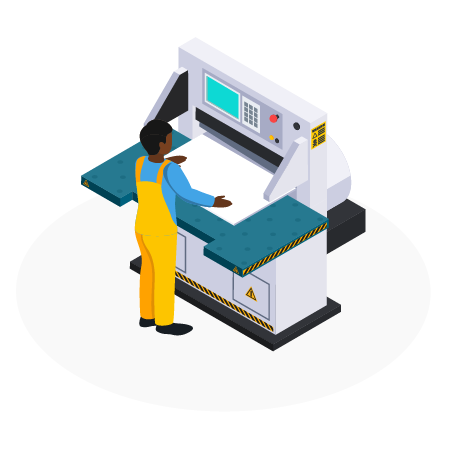
Print-ready artwork preparation is the process of checking and preparing design files to ensure they meet all the technical requirements for print production. This includes verifying colour mode, image resolution, bleed and trim marks, font embedding, file format and any other specifications required by the print supplier — delivering files that are technically correct and ready to go straight to press.
You need this when you want your digital and physical marketing to be designed as a single system rather than as separate work streams, when a campaign needs to feel coherent whether someone encounters it online, in an email, or in print, or when inconsistency between digital and print creative is undermining the professionalism of your brand’s overall presentation. Integrated creative is a sign of a brand that takes consistency seriously.
This service includes print production alongside digital asset creation from a single brief, ensuring that both outputs are consistent in look, feel and message. Covers design, print-ready artwork, digital asset adaptation and production management for both. Delivered as an integrated set of print and digital campaign assets.

Most marketing companies focus on channels and tactics.
We focus on reaction.
Before selecting platforms, formats, or media spend, we define how your audience thinks, feels, and decides. We use behavioural psychology to understand what will capture attention, build trust, and motivate action — then choose the channels that best support that outcome.
Every channel we use has a clear purpose, a defined role, and a measurable objective. Nothing is done “because it’s popular” or “because it’s expected”.
The result is marketing that feels natural to engage with, works across multiple channels, and is designed to deliver meaningful, long-term results.
Want to see how this approach works in practice?
The technical process of preparing a design file for print production — ensuring all elements meet the printer’s specifications for bleed, colour profiles, image resolution, font handling and file format — so the file can be sent directly to print without further modification.
A systematic review of the artwork file against the printer’s specification: checking bleed and safe zones, colour mode (CMYK or spot colour), image resolution (minimum 300dpi), font status (embedded or outlined), overprint settings and correct file format.
Bleed is additional artwork extending beyond the trim edge of the finished document — typically 3mm on each side. It ensures that when the document is trimmed during print finishing, any background colour or image that runs to the edge is not cut short, leaving a white margin.
An area inside the trim edge — typically 3mm — within which all critical content (text, logos, key visual elements) should be kept. Content placed too close to the trim edge risks being inadvertently cut in the trimming process.
CMYK (Cyan, Magenta, Yellow, Key/Black) for full-colour printing. Spot (Pantone) colours for specific brand colours or limited-colour print jobs. Artwork in RGB mode will produce inaccurate colour when printed on a CMYK printing press.
A minimum of 300dpi at the intended print size. Images sourced from websites (which are typically 72dpi) are not suitable for print production at standard sizes without significant quality loss.
A PDF/X-1a or PDF/X-4 file is the most widely accepted format for commercial print submission. The printer will specify the required PDF standard as part of their submission guidelines.
Minor errors may be flagged by the printer’s preflight system, allowing correction. More significant errors — incorrect colour mode, low-resolution images, missing fonts — may result in the file being rejected or, if not caught, visible quality problems in the printed output.
A technical validation of a print file against a defined specification profile. It can be carried out using professional pre-press software (such as Acrobat Professional or dedicated preflight tools). The designer should preflight before submission; the printer preflights again on receipt.
Yes, if the content has not changed. Retaining approved, preflighted print-ready files in an organised archive makes repeat print orders much faster and avoids the need to recreate artwork from scratch.
This website uses cookies to improve your experience. Choose what you're happy with.
Required for the site to function and can't be switched off.
Help us improve the website. Turn on if you agree.
Used for ads and personalisation. Turn on if you agree.