
Menu
Packaging design isn't just about aesthetics. It's a commercial decision — one that affects shelf appeal, brand perception, unboxing experience, and ultimately whether a customer picks your product over the one next to it.
Packaging concept design develops a visual approach that serves all of those functions. Rooted in your brand identity, designed for the environment it will live in, and crafted to create the kind of impression that builds desire before the product itself has even been experienced.

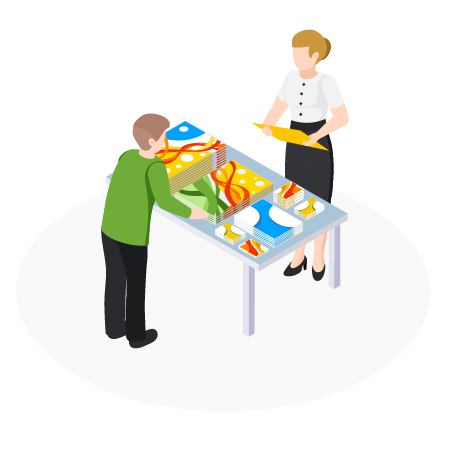
Packaging concept design is the development of the initial visual concept for a product’s packaging. It explores how the brand identity should translate into the packaging format, what the packaging needs to communicate on shelf or in a delivery context, and how it can create the right impression at the moment a customer first encounters the product. Concepts are typically presented as rendered visualisations for review and approval before development into final artwork.
You need this when customers have told you that your printed communications are difficult to read, when accessibility is a brand or company value that you need to apply to physical as well as digital materials, or when you operate in a sector — such as healthcare, public services or education — where accessible design is an obligation rather than a preference.
This service includes a review of your existing print materials against accessibility best practice, identification of specific issues, and redevelopment of materials to meet accessibility standards. May include large print, easy read and alternative format versions. Delivered as accessible versions of specified print materials with documentation of the changes made.

Most marketing companies focus on channels and tactics.
We focus on reaction.
Before selecting platforms, formats, or media spend, we define how your audience thinks, feels, and decides. We use behavioural psychology to understand what will capture attention, build trust, and motivate action — then choose the channels that best support that outcome.
Every channel we use has a clear purpose, a defined role, and a measurable objective. Nothing is done “because it’s popular” or “because it’s expected”.
The result is marketing that feels natural to engage with, works across multiple channels, and is designed to deliver meaningful, long-term results.
Want to see how this approach works in practice?
The creative development phase of a packaging project — defining the visual direction, structural approach, brand expression, key messages and consumer experience before any final artwork is produced.
Because packaging is a three-dimensional, functional object that must communicate on shelf, in transit and in use. A concept phase explores different structural and visual approaches before committing to a production-ready direction.
A set of developed creative directions (typically two to three options), each showing the primary face of the packaging with the proposed visual hierarchy, colour palette, typography and imagery treatment — presented as print-quality visuals.
The structure (size, shape, opening mechanism, material) must be established before the graphic design can be finalised, as the visual layout is determined by the structural template. Both disciplines are considered simultaneously in a rigorous concept phase.
Depending on the product category, packaging may need to carry mandatory information — ingredient lists, allergy information, nutritional data, recycling symbols, barcodes, legal entity names and country of origin. These requirements are identified at concept stage.
Against the brief: does the design communicate the product’s brand values, stand out in the relevant retail context, meet all regulatory requirements, work across the full product range and translate to production at the target cost?
Not effectively. The choice between flexible film, rigid card, glass or plastic, and the printing process (flexo, litho, digital) directly influences what the design can achieve. Production constraints should be established before the concept phase begins.
Two or three distinct directions is the standard for a packaging brief. More directions dilutes creative thinking; fewer limits strategic choice. Each direction should represent a genuinely different positioning or visual approach.
The packaging must compete for attention among adjacent products in the retail environment where it will be sold. Understanding the shelf context — competitor designs, lighting, viewing distance — is essential to designing packaging that stands out rather than blends in.
Concept designs should be reviewed against the brief by key stakeholders, with written feedback provided on each direction. One direction should be selected for development, with specific revision instructions, before the project progresses to production artwork.
This website uses cookies to improve your experience. Choose what you're happy with.
Required for the site to function and can't be switched off.
Help us improve the website. Turn on if you agree.
Used for ads and personalisation. Turn on if you agree.