
Menu
A static image can communicate. A motion graphic communicates with energy. For digital out-of-home screens, adding movement to your creative can significantly increase the attention it attracts — particularly in environments where static imagery is the norm.
Motion graphic adaptation takes your existing creative and brings it to life. Considered animation, smooth transitions, and movement that serves the message rather than distracts from it — so your DOOH creative stands out on screen and makes the most of every second of display time.

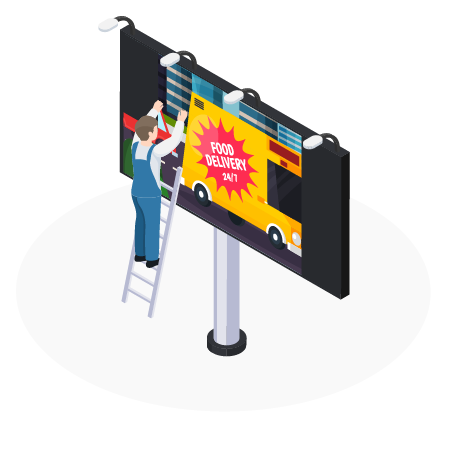
Motion graphic adaptation is the process of taking static DOOH or digital advertising creative and adding animation or movement to produce a motion version. The animation is designed to enhance the communication of the existing concept — using movement to draw attention, guide the eye or add emphasis — rather than introducing visual complexity that competes with the core message.
You need this when you want to reach residents or businesses in a specific area through letterbox distribution, when a promotion is geographically focused, or when your target audience is in a defined postal area and digital channels don’t offer the local precision you need. Leaflet distribution puts a physical piece of communication in the hands of potential customers without requiring them to find you first.
This service includes data selection and targeting, creative production, print and fulfilment management, and distribution to households or businesses within the defined area. Covers door-to-door or solus distribution options. Delivered as a fully managed leaflet or door drop campaign from creative to distribution.

Most marketing companies focus on channels and tactics.
We focus on reaction.
Before selecting platforms, formats, or media spend, we define how your audience thinks, feels, and decides. We use behavioural psychology to understand what will capture attention, build trust, and motivate action — then choose the channels that best support that outcome.
Every channel we use has a clear purpose, a defined role, and a measurable objective. Nothing is done “because it’s popular” or “because it’s expected”.
The result is marketing that feels natural to engage with, works across multiple channels, and is designed to deliver meaningful, long-term results.
Want to see how this approach works in practice?
The process of adding animation or motion to an existing static DOOH creative — bringing still graphic elements to life through movement, transitions or dynamic reveals to increase engagement on digital screens that support motion content.
When motion adds something meaningful to the communication — a reveal that creates a visual punchline, a dynamic update that shows live data, a transition that tells a short story, or an animated element that draws the eye in a way a static image cannot.
Most DOOH screen operators specify a loop duration of three to ten seconds. Creative should communicate fully within a single loop, as there is no guarantee a viewer will see more than one.
MP4 (H.264 or H.265 encoding) is the most widely accepted format for motion DOOH content. Specific bitrate, frame rate and audio settings vary by screen operator. Specifications should be confirmed before production begins.
Most outdoor DOOH screens are silent by default, as audio is inappropriate in most public outdoor environments. Some indoor venues with specific placements support audio. The media owner will confirm whether audio is available.
With the approved static creative, the screen specification (pixel dimensions, loop duration, file format), the specific animation intention (which elements should move, in what sequence) and the brand motion guidelines if any exist.
The final static frame of the motion graphic, which remains on screen for a portion of the loop duration. It should clearly communicate the key message on its own, as many viewers may only see the end of the loop.
Motion typically captures attention more effectively than static, as the human eye is drawn to movement. However, static creative designed with extreme simplicity can be equally effective. Motion for its own sake is not a performance guarantee.
Yes. The most efficient workflow produces static and motion versions from the same layered design file, with motion layers added to animate specific elements. This ensures visual consistency between both versions.
A motion graphic adaptation is typically an animated version of a print-inspired static creative — graphic elements moving within a designed frame. A video ad features filmed footage and is a different production category entirely.
This website uses cookies to improve your experience. Choose what you're happy with.
Required for the site to function and can't be switched off.
Help us improve the website. Turn on if you agree.
Used for ads and personalisation. Turn on if you agree.