
Menu
A design that works perfectly at A4 doesn't automatically work at A5, half-page, quarter-page or any of the other formats a print campaign might require. Resizing without thought creates inconsistency — elements that no longer balance, text that becomes too small to read, or images that crop in the wrong place.
Artwork resizing and adaptation handles those changes professionally. Each format is treated individually, with adjustments made to ensure the design still communicates effectively and looks intentional — regardless of the size or specification it's being adapted for.


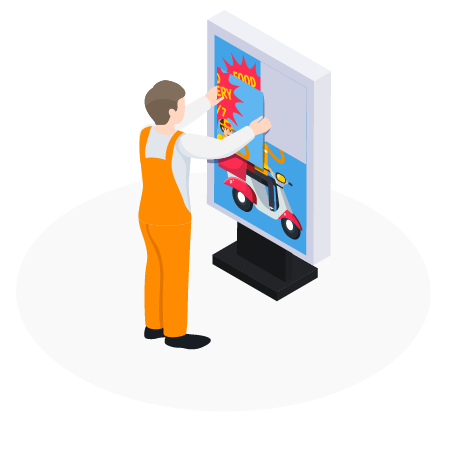
Artwork resizing and adaptation is the process of taking an existing piece of design and reformatting it to work correctly in a different size or format. Rather than simply scaling the original, adaptation treats each new size as its own design challenge — adjusting layout, typography, imagery and hierarchy to ensure the design continues to communicate effectively at every dimension it appears in.
You need this when you want to add a tangible dimension to a digital campaign, when direct mail historically performs well with your target audience, or when you want to reach a specific geographic area, demographic or customer segment with something physical that can’t be ignored or deleted. Direct mail, when done well, cuts through in a way that digital alone often can’t.
This service includes the strategy, copywriting and design of a direct mail campaign, print production, data management and distribution logistics. Covers personalisation where required and response mechanism setup. Delivered as a fully managed direct mail campaign from concept through to delivery and response tracking.

Most marketing companies focus on channels and tactics.
We focus on reaction.
Before selecting platforms, formats, or media spend, we define how your audience thinks, feels, and decides. We use behavioural psychology to understand what will capture attention, build trust, and motivate action — then choose the channels that best support that outcome.
Every channel we use has a clear purpose, a defined role, and a measurable objective. Nothing is done “because it’s popular” or “because it’s expected”.
The result is marketing that feels natural to engage with, works across multiple channels, and is designed to deliver meaningful, long-term results.
Want to see how this approach works in practice?
The process of taking an existing piece of print artwork and reformatting it to meet the technical specifications of a different size, publication or format while maintaining visual integrity and brand standards.
When an ad designed for one publication is being used in another with different dimensions, when a print piece needs a digital equivalent, when a poster design is being adapted for different site formats, or when a campaign is being extended into a new format.
Not always. Significant format changes — from landscape to portrait, from full-page to quarter-page — may require design adjustments to maintain visual hierarchy and legibility. A resize is not always simply a scale operation.
Increasing the size of an image beyond its original resolution reduces quality. All images in print-ready artwork should be supplied at 300dpi at the intended output size. Artwork produced for a smaller format cannot always be enlarged without sourcing new high-resolution images.
Checking that all text remains legible at the new size, that no elements fall within the bleed or trim-zone incorrectly, that the colour profile and resolution remain correct, and that the file format meets the new publication’s technical requirements.
A resize changes the dimensions while keeping the design the same. An adaptation involves design changes — rearranging elements, changing copy, adjusting the visual hierarchy — to make the artwork work effectively in the new format.
Yes. A print ad concept can be adapted for digital display, though the colour mode (CMYK to RGB), resolution, file format and sometimes interactivity requirements differ. It’s a different production exercise from a digital build from scratch.
The same sign-off process that applied to the original artwork should apply to resized or adapted versions. Even a simple resize can introduce errors or inconsistencies that require checking before submission.
Yes. Designing print campaigns in a master template with correctly set up artboards for all anticipated sizes from the outset significantly reduces the time and cost of producing adapted versions.
One to three working days for straightforward resizes to a few specific formats. More complex adaptations involving design restructuring may take longer. Resizing should always be completed in time to meet the receiving publication’s copy deadline.
This website uses cookies to improve your experience. Choose what you're happy with.
Required for the site to function and can't be switched off.
Help us improve the website. Turn on if you agree.
Used for ads and personalisation. Turn on if you agree.