
Menu
Not all subscribers are the same — and treating them as if they are is one of the most common reasons email performance plateaus. People engage with messages that feel relevant to them, and relevance starts with understanding who's in your list and what they actually care about.
Segmentation planning creates a structure for dividing your audience into meaningful groups. The result is email communication that speaks directly to the person receiving it — improving open rates, click-throughs, and ultimately, the number of people who take the action you're asking for.




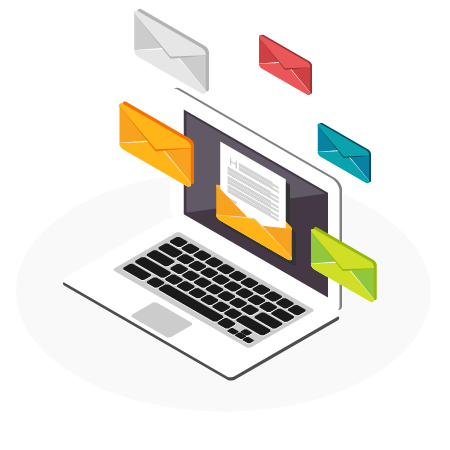
Segmentation planning is the process of dividing your email list into distinct groups based on shared characteristics or behaviours — such as purchase history, engagement level, location or industry. It defines which segments exist within your list, what criteria define each one, and how messaging should be tailored for each group to improve relevance and performance.
You need this when your sales cycle is long and customers need multiple touchpoints before committing, when you’re consistently losing leads after the initial enquiry stage, or when your sales team spends too much time following up manually with contacts who aren’t yet ready to purchase. An automated nurture sequence allows you to stay present and relevant without requiring ongoing manual effort.
This service includes the strategy, copywriting and design of an automated email sequence triggered by a new subscriber signing up. It covers a defined number of emails (typically three to seven) that introduce your brand, deliver value and guide the subscriber toward a defined next action. Includes setup and testing within your email platform. Delivered as a fully automated, live sequence.

Most marketing companies focus on channels and tactics.
We focus on reaction.
Before selecting platforms, formats, or media spend, we define how your audience thinks, feels, and decides. We use behavioural psychology to understand what will capture attention, build trust, and motivate action — then choose the channels that best support that outcome.
Every channel we use has a clear purpose, a defined role, and a measurable objective. Nothing is done “because it’s popular” or “because it’s expected”.
The result is marketing that feels natural to engage with, works across multiple channels, and is designed to deliver meaningful, long-term results.
Want to see how this approach works in practice?
A welcome sequence is a series of automated emails sent to new subscribers immediately after they sign up. It introduces your brand, sets expectations for future communications, delivers any promised lead magnet content and guides subscribers toward a first meaningful action.
Most welcome sequences contain three to seven emails. The aim is to deliver value and build familiarity without overwhelming a new subscriber. Length should reflect the complexity of your relationship with new contacts and the nature of your offering.
Immediately — within minutes of sign-up. This is the moment when a new subscriber’s interest is at its peak. A delayed first contact is one of the most common missed opportunities in email marketing.
It should thank the subscriber for signing up, deliver any promised content, introduce the brand in a warm and human way, set expectations for what they’ll receive and include a clear next step. Brevity and warmth work better than length and formality.
For e-commerce brands, a first-purchase discount in the welcome sequence is proven to increase conversion rates. For service businesses, a softer call to action — a free consultation, a useful resource — is often more appropriate.
Yes. If you capture data about what the subscriber signed up for or where they came from, that information can be used to tailor the sequence. Even simple personalisation — using the subscriber’s first name — improves engagement.
Most welcome sequences run over five to fourteen days. The spacing between emails should feel natural — long enough not to feel intrusive, short enough to maintain momentum while interest is high.
Subscribers transition to your regular email programme. The last email in the welcome sequence is an opportunity to set expectations about what that looks like and encourage the subscriber to take the next step in the relationship.
Yes. Subject lines, timing, length and calls to action within the welcome sequence can all be tested. Given that every new subscriber goes through the sequence, even small improvements compound into significant performance gains over time.
Track open rates, click-through rates and conversion rates across each email in the sequence. Compare the engagement of subscribers who’ve been through the sequence with those who haven’t, and track their subsequent commercial behaviour.
This website uses cookies to improve your experience. Choose what you're happy with.
Required for the site to function and can't be switched off.
Help us improve the website. Turn on if you agree.
Used for ads and personalisation. Turn on if you agree.