
Menu
Automation is one of the most powerful things about email marketing — but only when it's working as it should. Flows that were set up months or years ago may no longer reflect your current offer, your brand's voice, or the behaviour of your audience.
Automation refinement reviews your existing flows with fresh eyes. It identifies gaps, updates content that's become stale, improves sequencing, and ensures your automated journeys are still doing what they were designed to do — guiding subscribers towards the outcomes that matter most to your business.
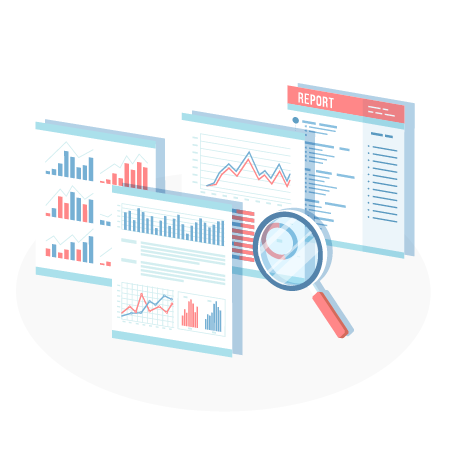
Automation refinement is the process of reviewing and improving your existing automated email flows. It involves assessing whether each flow is still relevant and performing as intended, updating content that has become outdated, adjusting timing and sequencing based on performance data, and making the changes needed to keep your automation effective as your business and audience evolve.
You need this when your email programme has grown organically over time and no longer reflects a coherent strategy, when there’s a clear gap between the results you’re getting and the results you know email marketing is capable of delivering, or when you’re planning significant investment in email and want to ensure the strategic foundation is in place first. Strategy work turns a collection of ad hoc sends into a purposeful, measurable programme.
This service includes a discovery process to understand your business objectives and current email activity, followed by the development of a full email marketing strategy covering audience, objectives, content framework, automation map, segmentation approach, platform requirements and measurement plan. Delivered as a strategy document with an accompanying implementation roadmap.

Most marketing companies focus on channels and tactics.
We focus on reaction.
Before selecting platforms, formats, or media spend, we define how your audience thinks, feels, and decides. We use behavioural psychology to understand what will capture attention, build trust, and motivate action — then choose the channels that best support that outcome.
Every channel we use has a clear purpose, a defined role, and a measurable objective. Nothing is done “because it’s popular” or “because it’s expected”.
The result is marketing that feels natural to engage with, works across multiple channels, and is designed to deliver meaningful, long-term results.
Want to see how this approach works in practice?
It’s the process of reviewing, improving and updating your existing automated email sequences to ensure they’re still relevant, performing to expectations and taking advantage of new data, platform capabilities or business priorities.
At least quarterly for active sequences, and immediately whenever the products, services or offers they reference change. Automated sequences are not set-and-forget — they degrade over time if not maintained.
Outdated content, broken links, logic errors that send the wrong email to the wrong person, sequences that haven’t been updated to reflect changes in the business, and missing sequences for journeys that have developed since the automation was first built.
Declining open or click rates within the sequence, a high drop-off rate at a specific step, commercial outcomes below expectations, or a content review that reveals outdated messaging are all indicators that refinement is needed.
Yes. As the business grows and the programme matures, new automation opportunities emerge. Refinement may mean improving existing sequences, filling gaps where automations don’t yet exist, or restructuring the overall automation architecture.
Most platforms allow you to pause, update and reactivate automations without losing contacts who are already in the sequence. Changes should be tested before reactivation to ensure the updated sequence performs as intended.
Yes. Post-purchase and loyalty automations are often the highest-return area for refinement because they operate on contacts with a proven propensity to buy. Small improvements to these sequences can produce disproportionate commercial returns.
Both are viable. In-house teams have the operational knowledge; external specialists bring an objective view and broader experience of what works across different programmes. For significant refinements, a combination of both is often the most effective approach.
Prioritise by commercial impact. The sequences that most directly affect revenue — abandoned cart, post-purchase, re-engagement — typically deserve the most attention. Low-volume or low-impact sequences can be reviewed on a less frequent cycle.
A workflow map showing the logic, triggers and content of each sequence, a performance log tracking key metrics over time, and a change log recording what has been updated and when. Good documentation makes refinement significantly faster and reduces the risk of errors.
This website uses cookies to improve your experience. Choose what you're happy with.
Required for the site to function and can't be switched off.
Help us improve the website. Turn on if you agree.
Used for ads and personalisation. Turn on if you agree.